Build a Centerpiece with Growing Succulents
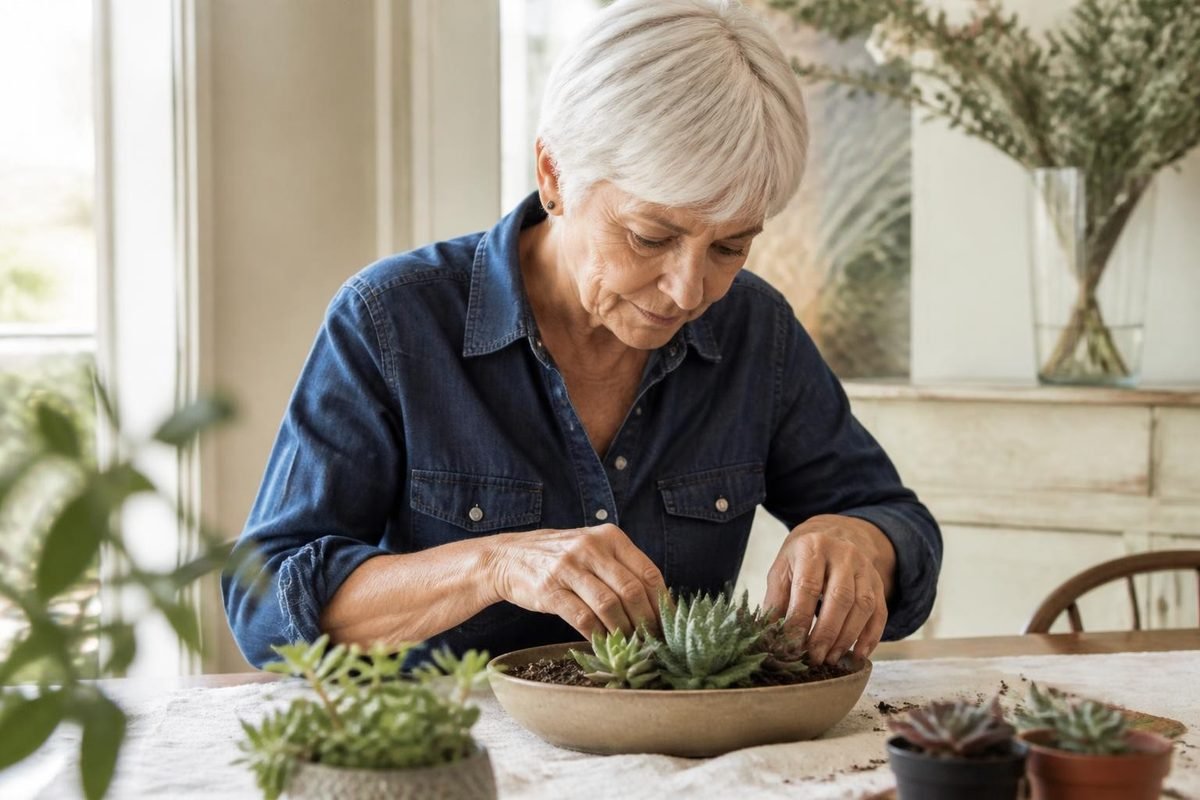
Make a living succulent centerpiece by planting small succulents in a shallow planter with drainage holes and cactus or succulent potting mix. Arrange the plants with space to grow, display them in bright light, and water only after the mix has dried.
Select a planter and suitable plants
Choose a shallow bowl or planter with drainage holes, then place it on a saucer to protect the table. Holes give extra water a way out, which makes it easier to avoid leaving roots sitting in excess moisture.
Pick small succulents that need similar amounts of light and water so they can share one container. Look for firm leaves and plants that sit steadily in their nursery pots. Combining rounded rosettes, upright stems, and trailing growth adds different shapes without filling every gap.
Think about the arrangement’s height as well as its shape. A low centerpiece on a dining table leaves people able to see and talk across it.
Collect what you will need
Clear a work surface and gather the supplies before planting. Having everything nearby makes it easier to handle the plants and finish the layout without stopping partway through.
- A shallow planter with drainage holes and a saucer
- Small succulents in their nursery pots
- Potting mix made for cacti and succulents
- A scoop or small trowel
- Fine gravel for a decorative top layer, if you want one
Use potting mix across the bottom of the planter rather than adding gravel beneath it. The drainage hole, not a gravel layer, is what allows excess water to leave the container.
Set the plants in place
Add enough potting mix to cover the planter’s bottom. Before removing the plants from their nursery pots, set them on top of the mix to test the arrangement. Put a larger plant a little off center, surround it with smaller plants, and position a trailing one near an edge. This creates a clear shape while keeping the layout from feeling crowded.
Once you are happy with the positions, take each plant out of its pot. Gently loosen roots that are tightly packed, then place the plants in the mix. Keep each plant’s base at about the same level it had in its nursery pot, so it is not planted noticeably deeper or higher.
Fill the spaces between plants with more mix and press it gently into place. Leave some room around each plant to allow air movement and future growth. If you choose to add gravel on top, keep the layer thin and make sure it does not touch the leaves or stems.
Keep the display healthy
Give the centerpiece bright light. A dining table away from a window can work as a temporary place to display it during a meal, but may not supply enough light for continued growth. Move the planter back to a brighter location afterward.
Feel or check the soil before watering instead of following a fixed schedule. Once it is dry, water thoroughly and let the extra drain into the saucer, then empty the saucer. This keeps the roots from sitting in drained water. Remove dry leaves as they appear, and turn the planter now and then so light reaches the plants from different sides.
Common questions about succulent displays
Is a planter without drainage workable?
It can be used, but water may collect around the roots because it has no easy exit. A planter with drainage holes is the simpler choice.
How can I tell when it is time to water?
There is no set watering interval. Check the mix and water after it dries; how quickly it dries depends on the light, temperature, and container.
Can cut flowers go in the centerpiece?
Yes. Put the cut flowers in a separate small vessel of water beside the planter. Do not push wet flower stems into the succulent soil.
On the same subject: Polish All Saints' Day traditions
Ends · PETALNOTES43